


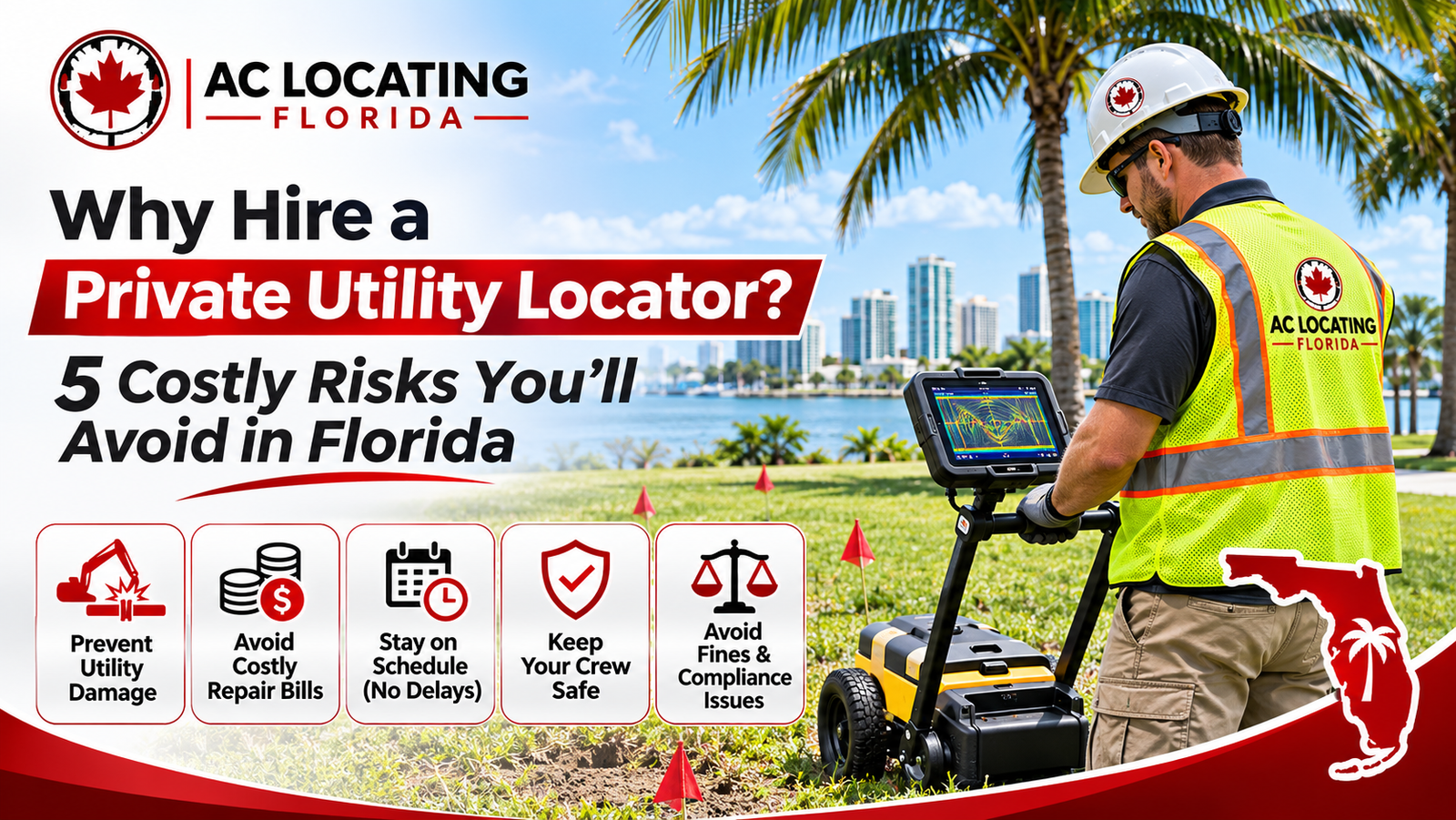
Why hire a private utility locator when 811 already exists? Because 811 was never designed to protect the infrastructure that actually sits on your property — and skipping that gap is where most excavation problems start.
1. Unplanned Repair Costs
Hitting an unmarked private line mid-project typically means repair costs at emergency rates, not planned ones. A scheduled private locate is a fixed, predictable expense by comparison.
2. Project Delays
A struck line halts excavation until the damage is assessed and repaired — pushing back your contractor’s entire schedule, sometimes by days.
3. Liability Exposure
If the damaged line serves a neighboring property, or the incident causes a safety issue, liability can extend well beyond the repair bill itself.
4. Safety Risk
Propane and electrical line strikes carry real safety risk, not just financial risk. This is the category where getting it wrong is measured in more than dollars.
5. Guesswork Instead of Documentation
Without a locate, your contractor is digging based on assumptions. Reputable private locators use electromagnetic (EM) locating for conductive lines and ground-penetrating radar (GPR) for non-conductive ones like PVC irrigation pipe — a dual approach that catches what a single method, or no method at all, would miss.
811 Protects the Utility Company — A Private Locator Protects You
811 exists to keep excavation crews from damaging utility-owned infrastructure, coordinated through Sunshine 811. It was never built to protect your irrigation system, pool equipment, or private electrical runs, because those aren’t the utility company’s responsibility. That’s the entire reason why hire a private utility locator matters — it’s the only service scoped to protect your specific project.
Who Actually Needs This Service
- Contractors excavating on private lots
- Homeowners planning pools, fences, or landscaping
- Property managers overseeing HOA or commercial sites
- Engineers and surveyors needing documented utility data
Bottom Line
A private utility locate fills the exact gap 811 leaves open. For any project touching private property, it’s the difference between digging with confidence and digging with a guess.
Related reading: Public vs Private Utility Locates | Cost of Hitting an Underground Utility Line
Quick FAQ
Is hiring a private utility locator required by law? No, but it’s the only way to detect private infrastructure that 811 doesn’t cover. How much does a private locate typically save compared to a repair? Costs vary, but scheduled locates are consistently far less than emergency repair and delay costs combined.
